
Shang Clan City is the Southern Border's great mountain trade city. The Shang clan built it through Shang Liang mountain.
Shang Clan City stands as a pin on the 3D mapAppearance
The city covers the whole of Shang Liang mountain. The outer city mixes bamboo buildings, dried mud houses, brick houses, shacks, treehouses, mushroom houses, caves, towers, castles, and more across the mountain in assorted colors. ch. 260
Fang Yuan names it as the next destination after the Bai Gu stretch: Shang Liang mountain, seat of Shang clan. Shang is a top Southern Border force, below only Wu clan in that ranking, and narration calls it the region’s business and trading center. The city is flourishing, open enough that demonic Gu Masters dispose of goods there, and wealthy enough that even Wu clan falls short of Shang on riches. ch. 229
Scale and history
Travellers arrive at a huge city gate at the mountain’s foot, ch. 258 and arrest warrants are posted on the city walls. ch. 259 The city covers the whole of Shang Liang mountain rather than a village slice of a peak. What a newcomer first sees is the outer city: bamboo buildings, dried mud houses, brick houses, shacks, treehouses, mushroom houses, caves, towers, castles, and more, mixed together across the mountain. As the Southern Border’s trading hub it occupies more space than any other force, and even Wu clan, called the region’s number one clan, does not field a mountain city of that scale. ch. 260
Shang clan remodelled the mountain for thousands of years. The surface is only the outer layer; deeper work dug an inner city into the mountain itself. ch. 260
Outer city and inner city
Entry from outer city into the inner city costs a hundred primeval stones per person when Fang Yuan first goes in, a fee the guard frames as keeping space and order. ch. 260 The inner city has wide paths that can take ten horse carts abreast, fewer crowds than the outer city, Gu Masters everywhere, and almost no mortals, because the fee screens them out. ch. 261
From inner to outer the mountain is cut into five inner regions plus the outer city. ch. 261 ch. 265 First inner city is the central inner city, Shang clan’s political heart and military base. Second is the clan city, for Shang clansmen only. Third is the high-class zone, fourth the middle-class zone, and fifth the low-class zone. Beyond fifth lies the outer city, busy with traffic and goods and more chaotic than the layers above. Passing deeper without the right Shang token means paying again at each gate: two hundred primeval stones into fourth, six hundred into third, and second inner city is closed to fee alone. Shang clan issues tokens of varied authority for different statuses. ch. 261
The clan is the Southern Border’s most wealthy clan, and its trade reaches across the region. The city is literally a mountain of wealth as well as stone. ch. 261
Size, zones, and trade
Wei Yang’s tour states that Shang clan city is first in the Southern Border by size, that Shang has operated on Shang Liang mountain for thousands of years, and that the city holds over ten thousand shops and hundreds of thousands of people. Besides the five-plus-outer layering, the city is also split into working zones: food, rock gambling, caretaking, red-light, Gu fighting, substitute refinement, auction, and battle among them. Auctions run on a fixed ladder of small, mid, and large sales through the month. ch. 265 Demonic Gu Masters sell loot and restock Gu here; that traffic is one pillar of the city’s growth, even while the city still presents itself as righteous path ground. ch. 259
Battle stage and external elders
The battle zone is the most popular place in the city, with over eighty stages for single, dual, and multi fights, and terrain fields that change the match. Shang uses the stage to recruit outside talent. A Gu Master who climbs the stages and holds eighteen consecutive rounds can draw the clan leader’s eye; Wei Yang himself rose that way and later became an external clan elder under Shang Yan Fei. Young masters also recruit demonic Gu Masters for their own factions, and those retainers can rise to external elder status if their patron takes the clan leader seat. ch. 265
Clan leadership and young masters
Shang Yan Fei is clan leader during the arc on the mountain. He hosts a clan banquet for the young masters and for Fang Yuan and Bai Ning Bing after Shang Xin Ci is acknowledged. ch. 269 The young master seats are a standing contest: only Shang clan young masters may compete for young clan leader, ch. 267 and each year one young master can be eliminated from the slate. ch. 268 Shang Yan Fei reduced the young master seats from fifteen to ten. ch. 263
At the banquet Wei Yang names zone control for several of Shang Yan Fei’s children: eldest son Shang Qiu Niu manages the caretaking zone; fourth son Shang Chao Feng manages the Gu fighting arenas; Shang Pu Lao manages the brothels of the red light zone. The same gathering also places Shang Pi Xiu over rock gambling dens, Shang Suan Ni over restaurants and silk stores, Shang Fu Xi over auctions, Shang Bi Xi over the substitute refinement zone, and Shang Ya Zi among the young masters already known to Fang Yuan. Shang Chi Wen, sixteenth daughter, holds the battle arenas. Birth-order labels in that stretch include Ya Zi as second son, Pu Lao as eighth, Suan Ni as ninth, Bi Xi as tenth, Fu Xi as thirteenth, and Pi Xiu as twenty-first. ch. 269
On auction day the contesting young masters stand in three factions plus loners. Shang Qiu Niu stands first with elder and clansman support. Shang Pu Lao, Shang Suan Ni, and Shang Bi Xi form a second bloc. Shang Chao Feng and Shang Fu Xi form a third, holding the Gu battle zone and the auction zone. Shang Ya Zi is a loner with little influence; Shang Chi Wen holds the battle stage without ambition for the higher contest; Shang Pi Xiu is among the remaining contesting young masters. ch. 305
Five elders and generals
Shang Chao Feng states that among five great elders, three are external elders, and that Shang clan city’s battle stage alone lets demonic Gu Masters become Shang external elders. ch. 327 Named figures tied to that five-elder or five-general circle include Wei Yang, who controls the intelligence agency Feng Yu Manor; ch. 306 Yi Huo, Blazing Inferno, ranked above Wei Yang among Shang Yan Fei’s experts; ch. 355 ch. 356 and Shang Bu Li, titled Two faced man, who controls the slave trade market and is called the number one general under Shang Yan Fei. ch. 306
City uproar, festival, and departure
After Fang Yuan defeats Ju Kai Bei on the stage, tea houses, restaurants, and streets fill with talk. People call him Little Beast King; he and Bai Ning Bing are also called the Black and White Demons. That Gu set alone is enough for him to spread his name across the Southern Border and gain his own title. He then retires from the stage instead of pressing for external elder. That retirement briefly looks like the end of Shang’s external-elder path, until Shang Yan Fei clarifies that the policy still stands. Fang Yuan then announces in public that he will help Shang Xin Ci take a young master seat, and the city’s attention swings from the stage to that succession fight. ch. 321
Shang Chao Feng later states the rule in clan terms: Shang clan city’s battle stage alone lets demonic Gu Masters become Shang external elders, a policy unique to Shang, and that among five great elders three are external. ch. 327 The same policy is why many demonic Gu Masters leave Shang caravans alone when trading outside. They want a backup path into the clan. Other Southern Border clans keep battle stages mostly for their own people; Wu clan’s is the largest and most popular of those, but Shang’s external elder door is what pulls outsiders in. ch. 321
The Auspicious Festival commemorates the Shang ancestor who founded the clan thousands of years earlier. On that day the founding story is told: a poor mortal trader obtained a Gu Master inheritance token, rose step by step, and finally founded Shang clan city. On festival day the inner city is hung with lanterns, large businesses close, and people set up stalls as a living game of buying and selling. Sitting young masters send banquet invitations that force a newcomer to pick a faction. Shang Qiu Niu is also named the eldest son of the first wife. ch. 326
Shang Xin Ci later wins a young master seat. Fang Yuan and Bai Ning Bing leave the city afterward, with Shang Xin Ci seeing them off outside the city as they head toward San Cha Mountain. Before parting, Fang Yuan reminds her of the ranks above the ten young masters: young clan leader Shang Tuo Hai, the five elders, Shang Yan Fei, and the Shang supreme elder. ch. 333
Clan leader succession
Shang Liang mountain remains Shang clan’s main base and trading connector for righteous path, demonic path, and lone cultivators. At the succession ceremony Shang Bu Li stands at the mountain peak before guests from Tie, Yi, Wu, Hou, and other Southern Border super forces, plus demonic and lone experts. A clear rainbow road extends from the mountain’s interior, Shang Xin Ci walks it to a cloud throne, and she becomes Shang clan leader. Of Shang Yan Fei’s five great generals, only Shang Bu Li and Wan Qian Shan remain after Yi Tian mountain; Shang Bu Li still controls slave trade, and Wan Qian Shan handles resource gathering such as mining, herb gathering, and hunting as an external elder for outside Gu Masters’ interests. ch. 1072
Related places
- Southern Border, the region whose trade and clan politics the city concentrates. ch. 229
Chronicle
Fights here
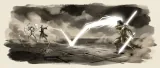
- Fang Yuan and Bai Ning Bing against Wei Yang as of ch. 265
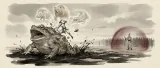
- Fang Yuan against Li Hao as of ch. 289
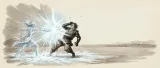
- Bai Ning Bing against Tie Dao Ku as of ch. 298
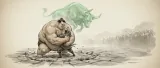
- Fang Yuan against Zhu Ba as of ch. 299
- Bai Ning Bing against Yan Tu as of ch. 312
- Fang Yuan against Ju Kai Bei as of ch. 317
Connections(96)
0 later connections are veiled.
Show all 96 Show fewer
- Southern Border×3
- Fang Yuan and Bai Ning Bing against Wei Yang×3
- Fang Yuan against Li Hao×3
- Bai Ning Bing against Tie Dao Ku×3
- Bai Ning Bing against Yan Tu×3
- Fang Yuan against Zhu Ba×2
- Fang Yuan against Ju Kai Bei×2
- Fang Yuan×2
- Shang Clan×2
- Wu Clan×2
- Shang Liang Mountain×2
- Shang Xin Ci×2
- Yi Tian Mountain×2
- Shang Yan Fei×2
- Shang Ya Zi×2
- Wei Yang×2
- Feng Yu Manor×2
- Shang Bi Xi×2
- Shang Chao Feng×2
- Shang Fu Xi×2
- Shang Pu Lao×2
- Shang Qiu Niu×2
- Shang Tuo Hai×2
- Shang Chi Wen×2
- Shang Pi Xiu×2
- Shang Suan Ni×2
- San Cha Mountain×2
- Shang Bu Li×2
- Yi Huo×2
- Little Beast King×2
- Zi You Mountain×2
- Ju Feng Mountain×2
- Fang Zheng
- Genesis Lotus Immortal Venerable
- Tie Dao Ku
- Demonic Path
- Righteous Path
- Bai Clan
- Fei Clan
- Tie Clan
- Black and White Boar Gu
- Blood Moon Gu
- Bone Spear Gu
- Bone Spike Gu
- Blood Skull Gu
- Flesh-bone Gu
- Flying Bone Shield Gu
- Footless Bird
- Heavenly Essence Treasure Lotus
- Jumping Grass Gu
- Plunder Gu
- Spiral Bone Spear Gu
- White Silver Relic Gu
- Bai Gu Mountain
- Earth Path
- Strength Path
- Blue Bird Ice Coffin Gu
- Bone Flesh Unity Gu
- Ice Blade Gu
- Water Shield Gu
- Creative Thinking Gu
- Intelligent Heart Gu
- Tactful Gu
- Bai Gu Mountain
- Poison Vow Gu
- Seize Gu
- Steel Tendon Gu
- Xiao Die
- Xiao Yue Mountain
- Xue Lei Mountain
- Four Seasons Restaurant
- Gu Masters
- Whale Enslavement Gu
- Shang Clan City
- Moonlight Crawling Mountain Tiger
- Fourth Inner City
- Charcoal stones
- Star stones
- Bookworm
- Flesh Sac Secret Chamber
- Bai Ning Bing
- Nan Qiu Garden
- Shi Tian Restaurant
- Xiao Yan
- Gu Master
- Broadsword Light Gu
- Dragon Strength Gu
- Sword Shadow Gu
- Early Spring
- Light Source Gu
- Lightning Thoughts Gu
- Rainbow Light Gu
- Shang Bi An
- Hei Tu
- Divine Doctor Sheng Shou
- Doctor Su Shou